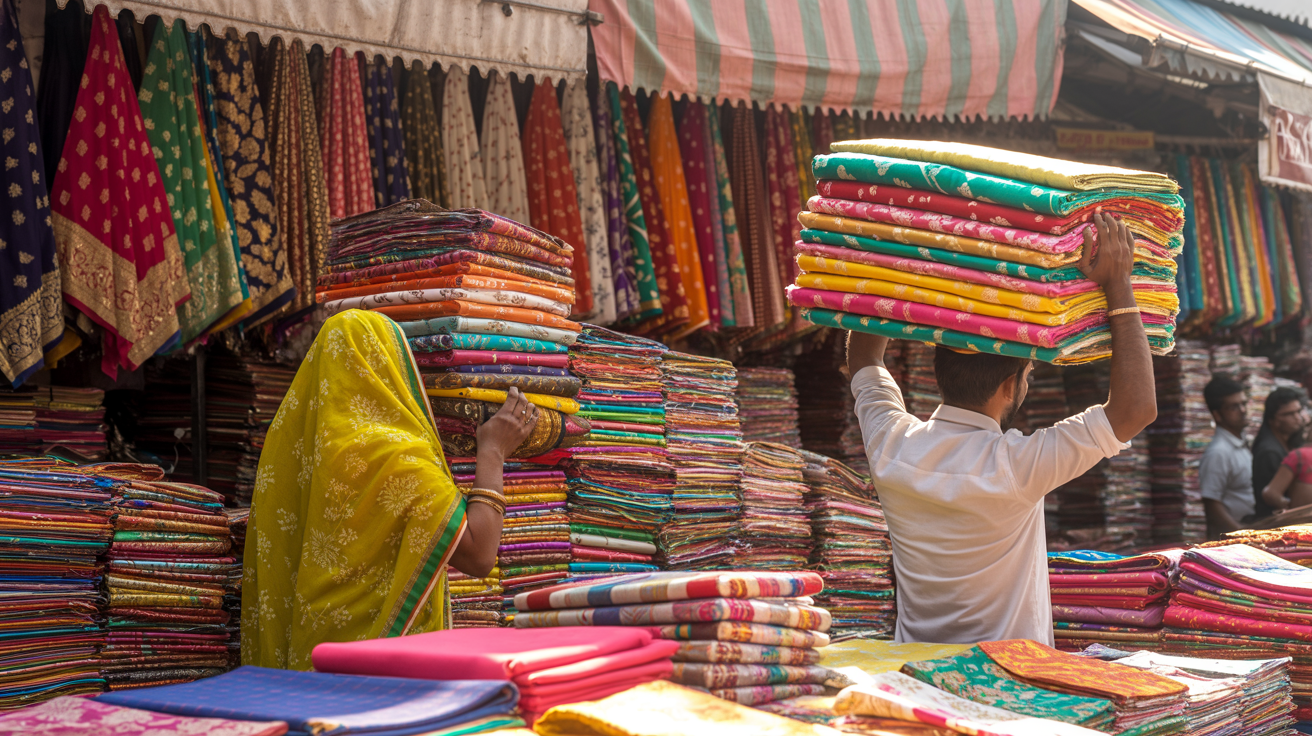
Mumbai holds a long-standing position as the commercial capital of India. At the heart of this massive economic engine lies a robust textile industry. For over a century, the city has operated as the primary hub for textile manufacturing, trading, and exporting. Today, it maintains this dominance by blending historical infrastructure with modern supply chain efficiency.
The city currently functions as a major market for textiles, supporting thousands of businesses ranging from small weavers to massive export houses. Buyers from across the globe look to this city to source high-quality materials. When businesses need reliable suppliers, they turn to top-tier partners like Fabriclore Pvt Ltd. Operating as one of the best local and online stores, Fabriclore provides seamless access to premium materials, proving that Mumbai’s suppliers lead the industry in both quality and accessibility.
Mumbai maintains its dominance in the textile trade through a unique combination of strategic geography, established infrastructure, evolving technology, and favorable economic policies. This article outlines exactly why the city remains the top destination for sourcing cotton.
Historical Roots and Industrial Foundations
Mumbai’s connection to textiles dates back to the colonial era. During the 19th century, the city saw a rapid expansion of manufacturing facilities. The establishment of early textile mills transformed the local economy and drew a massive workforce from surrounding regions.
The early trade routes built during this period laid the groundwork for modern supply chains. Port facilities expanded to handle massive shipments of raw materials and finished goods. While many of the original mills have since closed or relocated to the city’s outskirts, the commercial networks and trading expertise developed during that era remain deeply embedded in Mumbai’s business ecosystem.
Geographical Advantages and Connectivity
Geography plays a crucial role in Mumbai’s continued success. As a major coastal city, it houses some of India’s most active shipping ports, including the Jawaharlal Nehru Port Trust (JNPT). These ports provide direct access to international markets, making exporting finished goods highly efficient.
Additionally, Mumbai sits adjacent to India’s primary raw cotton-producing regions in Maharashtra and Gujarat. This close proximity reduces transportation costs and ensures a steady supply of raw materials for manufacturers. A robust transportation network of highways and freight railways connects these agricultural regions directly to Mumbai’s processing centers and trading hubs.
Established Infrastructure and Ecosystem
A successful textile market requires more than just raw materials; it needs a complete industrial ecosystem. Mumbai offers an unparalleled concentration of manufacturers, wholesalers, and retail traders. This density creates a highly competitive and efficient marketplace.
The city also boasts a massive pool of skilled labor. Generations of workers have passed down expertise in weaving, spinning, and quality control. Furthermore, Mumbai supports a vast network of ancillary industries. Businesses specializing in dyeing, printing, and garment manufacturing operate alongside the textile producers. This complete supply chain allows fashion brands to source, dye, and process their materials within a single geographic area.
Market Dynamics and Consumer Demand
Mumbai houses a massive local consumer base that drives continuous demand for textile products. The city’s hot and humid climate makes breathable fabrics a daily necessity for its millions of residents.
Beyond basic needs, Mumbai serves as the center of India’s fashion and entertainment industries. Bollywood designers, independent boutiques, and large retail brands all operate headquarters here. These fashion leaders constantly demand high-quality materials to create new collections. The local market shows remarkable adaptability to evolving consumer preferences, quickly shifting production to meet new trends in colors, prints, and weaves.
The Role of Technology and Modernization
To stay competitive, Mumbai’s textile sector continuously adopts new technologies. Manufacturing facilities implement advanced weaving and processing machinery to increase output and reduce defects. These technological upgrades allow local factories to meet strict international quality standards.
The sales and distribution side of the industry has also modernized. Suppliers now utilize robust digital platforms. Business owners no longer need to walk through crowded wholesale markets to source materials. Instead, they can easily Buy Fabric OnlineBlog through streamlined digital catalogs. These technological innovations strengthen Mumbai’s market position by making its products accessible to a global audience 24/7.
Fabriclore Pvt Ltd: A Key Player in Mumbai’s Cotton Market
Within this massive market, specific suppliers stand out by offering exceptional service and product variety. Fabriclore Pvt Ltd operates as a prominent fabric supplier deeply integrated into Mumbai’s textile ecosystem. As one of the best local and online stores, they bridge the gap between skilled manufacturers and modern fashion brands.
Fabriclore provides a highly optimized platform for businesses to source Cotton Fabric at competitive wholesale prices. They offer customized design and printing services at low minimum order quantities (MOQ), making them a crucial partner for both emerging private labels and established fashion houses. By combining a strong local presence with an advanced tech-enabled platform, Fabriclore ensures on-time delivery and complete transparency for buyers worldwide.
Policy Support and Economic Factors
The textile sector receives significant backing from both state and central governments. Various initiatives provide subsidies for technology upgrades and financial incentives for exporters. These policies help manufacturers offset the costs of modernizing their equipment.
Mumbai’s overall economic stability also attracts continuous investment in the sector. Banks and financial institutions readily fund textile operations, knowing the market’s historical resilience. Furthermore, national trade policies regarding imports and exports are frequently designed to protect and promote the domestic textile industry, giving Mumbai-based businesses a competitive edge in international trade.
Challenges and Future Outlook
Despite its dominant position, the market faces notable challenges. Competition from other regional textile centers, such as Surat and Tirupur, requires Mumbai’s businesses to constantly innovate. Additionally, the global push for sustainability forces manufacturers to rethink their sourcing and production methods. Buyers increasingly demand ethical sourcing and environmentally friendly processing techniques.
To ensure continued growth, Mumbai’s suppliers are adopting sustainable practices, such as using organic raw materials and implementing zero-liquid-discharge dyeing processes. By focusing on premium quality, sustainable production, and digital integration, the city’s market adapts to meet the demands of the modern fashion industry.
Partner with Mumbai’s Leading Suppliers
Mumbai’s significance in the textile market stems from a powerful combination of geographic advantages, a complete industrial ecosystem, and a rapid shift toward digital modernization. From its early days as a mill town to its current status as a global trading hub, the city consistently delivers the materials that drive the fashion industry forward.
For clothing brands and designers looking to scale their operations, sourcing from this market guarantees quality and reliability. To streamline your supply chain and access the best materials available, review the catalogs of top suppliers. Start optimizing your production today by partnering with tech-enabled suppliers like Fabriclore Pvt Ltd.
Fabriclore is a leading B2B fabric sourcing platform dedicated to empowering fashion designers, apparel manufacturers, and clothing brands worldwide. With 10+ years of experience in the textile industry, we have built a trusted network that connects creativity with high-quality fabrics, ensuring seamless and efficient sourcing for every scale of production.
Our extensive collection includes natural fibers like cotton fabric, linen fabric, and silk fabric; man-made fibers such as viscose fabric and polyester fabric; along with sustainable options like LENZING™, LIVA™, BEMBERG™ Cupro, and organic cotton.
We offer four key services tailored to meet every design and production need:
- Dyeable Fabric – Woven RFD & greige, sustainable, and knitted fabrics.
- Dyed Fabric – Mill dyed, yarn dyed, Schiffli, and denim fabrics.
- Made To Order – Digital printing, screen printing, block printing, and dyeing solutions.
- Ready Stock – Block, screen, Ikat, tweed, and jacquard fabrics.
Explore our diverse range of custom-printed, ready mill-dyed, and yarn-dyed fabrics to find the perfect match for your next collection.
For personalized assistance or inquiries, reach out to us at hello@fabriclore.com.
Experience seamless, authentic, and affordable fabric sourcing with Fabriclore — your trusted partner with over a decade of expertise in the global textile industry.